Nashik – As the monsoon breathes new life into Maharashtra’s Sahyadri ranges, Nashik has rapidly emerged as a go-to destination for nature enthusiasts and trekkers. The district’s lush greenery, cascading waterfalls, mist-covered peaks, and iconic forts attract thousands of visitors from across the state, especially to regions like Igatpuri, Trimbakeshwar, Surgana, and Peth.
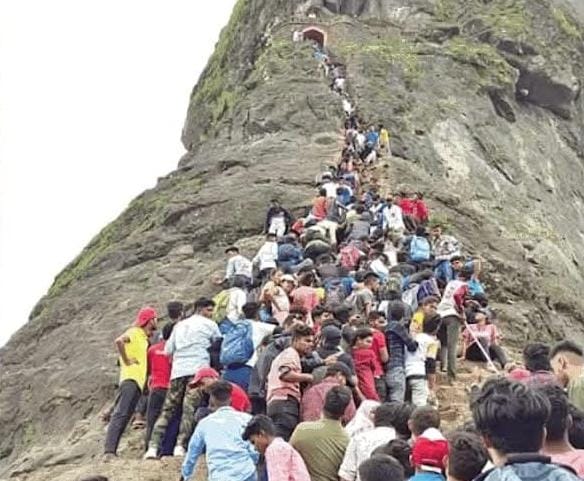
However, this seasonal surge in footfall has also sparked growing concern over tourist safety—particularly at treacherous historical sites like Harihar Fort, where last week’s overcrowding led to panic and confusion. Narrow stairways carved into sheer cliffs left trekkers stranded mid-ascent, prompting local volunteers to intervene and guide climbers to safety. The potential for disaster looms large.
Nashik is home to the highest number of forts in Maharashtra—approximately 400 in total—many of which now draw large numbers of young, untrained climbers looking for adventure but unaware of the risks involved. At Harihar Fort, for example, the ascent involves a near-vertical climb with only shallow grooves to place one’s feet, making it particularly perilous during the rains.
Recognizing the risk, the Forest Department, along with local police, has moved to restrict access to the fort. On weekends, the number of visitors is now capped at 300, with forest guards and volunteers stationed along the route. While this measure has temporarily eased pressure, experts argue it’s far from enough.
Mountaineer and travel blogger Prashant Pardeshi, who has documented several treks in the region, termed the current scenario “dangerous tourism.” He criticized the administration for reactive rather than proactive safety planning and pointed out the lack of infrastructure, emergency preparedness, and inter-departmental coordination.
According to Pardeshi and others in the adventure community, what’s urgently required is a sustainable approach to heritage tourism. This includes basic amenities like railings, signage, first-aid stations, and communication support on forts that see high visitor traffic, especially during monsoon months.
The forts of Nashik are more than trekking spots—they are historical treasures. With footfall rising exponentially each year, preserving these structures while ensuring public safety must become a priority. Responsible tourism, backed by firm regulation and modern infrastructure, is the only path forward.
⸻
Summary:
•Nashik sees a spike in monsoon tourism, especially at forts and waterfalls.
•Harihar Fort, with its steep steps, has witnessed overcrowding and safety scares.
•Authorities have capped weekend visitors to 300 at Harihar and deployed safety personnel.
•Experts warn of “dangerous tourism” due to poor infrastructure and crowd management.
•Urgent reforms and better planning are needed to protect both tourists and historical sites.